.png)
EPHect: a year in review
Looking back over the past year, the Endometriosis Phenome and Biobanking Harmonisation Project can celebrate many successes, including welcoming the 70th research site (in 26 countries) that adheres to EPHect standards.
Together we contribute to collaborative and comparable endometriosis discovery. Together, we are a global network dedicated to finding solutions and improving the lives of those impacted by endometriosis.
A 2024 'stock take' showed us just how much data and how many samples have been collected worldwide from the then 46 research sites, where the EPHect standards were applied.
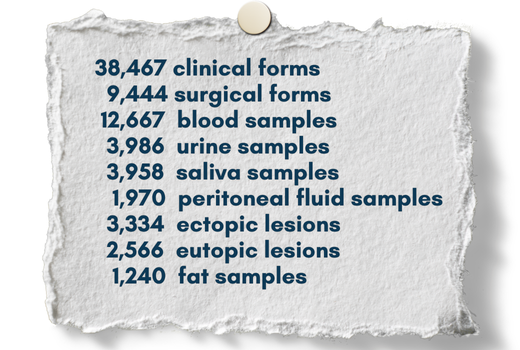
The 2026 stock take is currently under way.
 Centres, adhering to the same standards, working together towards endometriosis discovery, have also proven to be successful in obtaining grant funding.
Over the decade since the inception of EPHect, more than US$35 million have been raised towards research in endometriosis - research in which the EPHect tools are utilised to enable investigators to compare data, samples, and finding.
Ensuring your grant applications mention that your project(s) adheres to EPHect standards is clearly a strength!
Publication of four new SOPs
 Last year EPHect introduced four new standard operating procedures for the use of experimental models in endometriosis discovery.
These detailed SOPs are designed to aid both new and established investigators, and to maximise rigour, transparency, and comparability of foundational basic science discoveries.
They comprise homologus models, heterologous models, pain models, and organoid models.
Sharing knowledge and experience
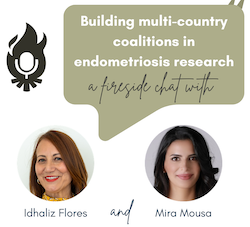
In 2025 EPHect introduced 'fireside chats'.
These are intended for investigators to share experiences from implementing research projects using the EPHect tool set.
This informal, online, format provides an opportunity for participants to ask questions of their peers, pick one another's brains, and to have discussions about what works, and what doesn't, when undertaking research in endometriosis.
The first 'chat' was between Idhaliz Flores and Mira Mousa, who shared their experiences of building multi-country coalitions in endometriosis - in central and south America and the Middle East, respectively. Watch the 'chat' here.
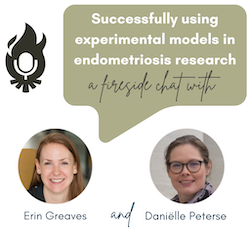 The second 'chat' was between Erin Greaves and Daniëlle Peterse, following the publication of the SOPs pertaining to the use of experimental models in endometriosis.
There are limitations in studying endometriosis in women - but experimental models allow us to probe physiologic windows, key events and modifiable processes in our laboratories. Drs Greaves and Peterse shared how to successfully implement these SOPs in their own experience and varied laboratory settings. Watch the 'chat' here.
If there are topics you would like us to address in our Fireside Chats then please send us an email.
Online resources published
Finally, we have created two online repositories:
- A list of publications with research results from investigations that utilised EPHect tools links to each original publication, links to published translations of the EPHect EPQ and, EPHect-based SOPs and protocols.
- A summary of multi-centre/multi-country collaborations, where funding and project success were enhanced by utilisation of EPHect tools and standards.
We're excited about the expanding network, and we look forward to working with everyone in this and coming years to truly make a difference - together - for everyone affected by endometriosis.